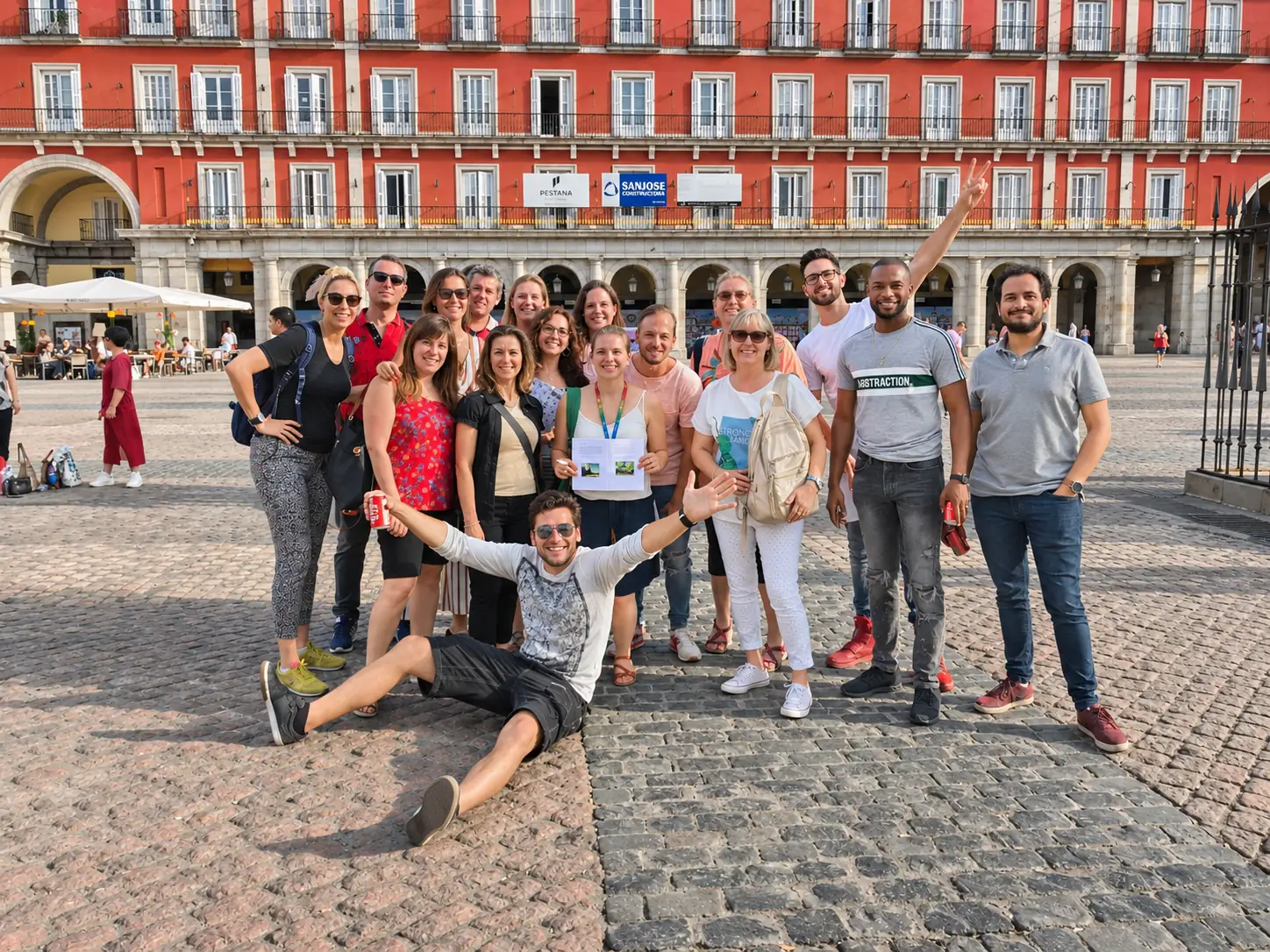
Scavenger Hunt Madrid: Treasure Hunts for Teams Explained
Search for "scavenger hunt Madrid" and you'll find everything from smartphone apps for couples to fully guided games for 200 employees. They all send people around the city looking for things — but they're built for very different situations. If you're organising something for a company group, picking the wrong format can mean a quiet afternoon of people staring at their phones instead of the lively, shared experience you had in mind.
Here's how the main types of city hunts in Madrid compare, and what to look for when the players are your colleagues.
The short version
"Scavenger hunt" and "treasure hunt" are used almost interchangeably. What really matters is whether the game is app-based or paper-based, self-guided or run by a guide, and designed for tourists or for teams. For company groups, a guided, paper-based game with competing teams and an awards ceremony — like our Madrid treasure hunt — keeps everyone engaged and together.
In this article
Scavenger Hunt vs Treasure Hunt: Is There a Difference?
Strictly speaking, a scavenger hunt gives players a list of items or tasks to tick off in any order — find a red door, photograph a street musician, collect a metro ticket. A treasure hunt follows a trail: each clue leads to the next location, until the final one reveals the "treasure". In British English "treasure hunt" is the more common term; Americans tend to say "scavenger hunt".
In practice, most modern city games blend both: a route of clues to follow, plus a list of creative tasks that earn bonus points along the way. That's how our Madrid game works too — and why people find us under both names. In Spain you'll also hear búsqueda del tesoro, or gincana (gymkhana) for team games with challenges.
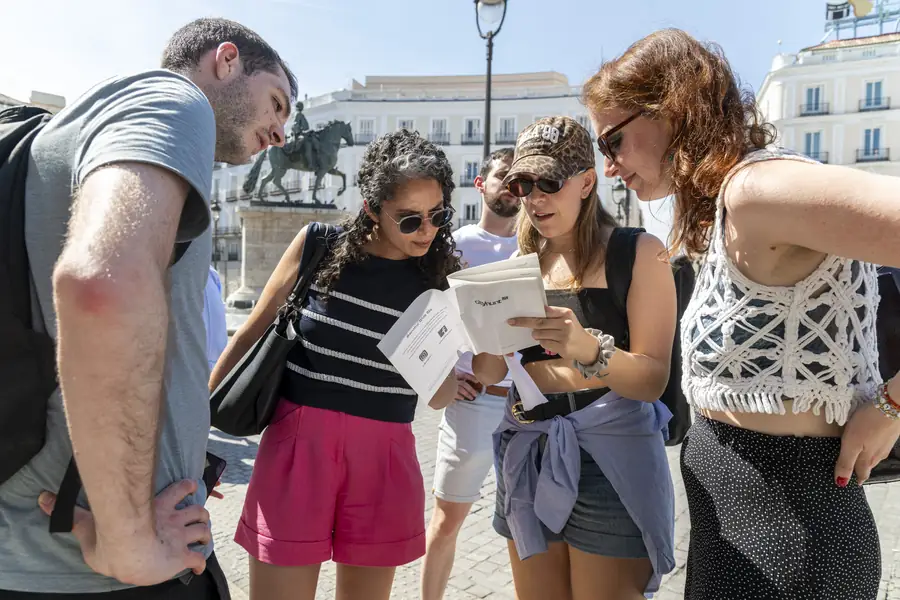
The Four Kinds of City Hunts in Madrid
1. Self-guided app games
You buy a game, download an app and play whenever you like. Cheap and flexible — great for couples, families or friends visiting Madrid. For companies, the downside is that there's no host, no shared start and finish, and phones end up at the centre of the experience.
2. Printed self-guided hunts
A booklet or PDF you play on your own. Charming and screen-free, but again nobody runs the game, checks the answers or keeps a large group on schedule.
3. Guided tourist hunts
Some walking-tour companies add a quiz or treasure-hunt element to a guided walk. It's a fun way to sightsee, but it's still a tour: one group follows one guide, so there's no real competition or teamwork.
4. Guided team-building hunts
Built for groups that want to work together. Participants are split into competing teams, each with its own game pack; a guide briefs everyone, follows the route, helps when needed, scores the answers and hosts an awards ceremony. This is the format designed for companies — and the one we run.
App or Paper?
Apps are convenient: automatic scoring, GPS hints, instant results. But with a phone in one person's hand, the rest of the team often ends up watching over their shoulder. With a paper map and a clue booklet, the whole team leans in, points at the façade, argues about the answer and looks up at the city instead of down at a screen. For team building, that difference is the whole point.
We still use phones — one per team — for the photo and video challenges, which tend to produce the best laughs at the awards ceremony.
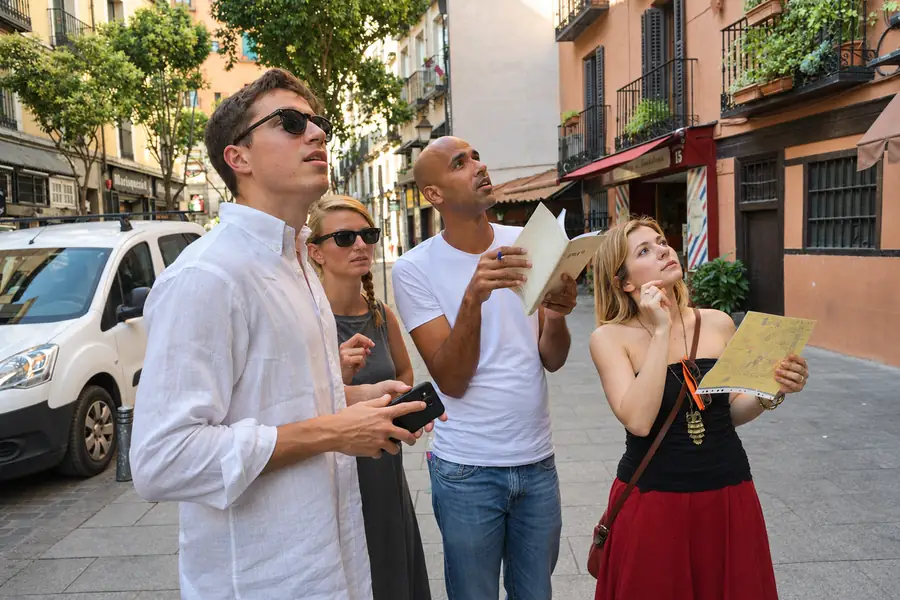
What a Company Group Actually Needs
- Everyone starts and finishes together. A shared briefing builds anticipation; a shared finish — ideally at the restaurant — gives the day a proper ending.
- Teams, not tourists. Competing teams of 4–6 make people talk, plan and divide tasks. Mixing departments on purpose makes it even more valuable.
- A host who manages the game. Someone has to keep 50 people on time, rescue a stuck team and settle disputes about the answer.
- The right difficulty. Challenging enough to be satisfying, easy enough that every team finishes with a smile.
- Language flexibility. International teams need the game in English; local teams may prefer Spanish.
- Something to take away. Points, prizes, photos and a story to tell back at the office.
"Also the clues were good as it was challenging but not impossible. The photos were really fun too! It was the perfect way to start our stay in Madrid." — Jenny Leeming, Sky
Why Madrid's Old Town Is Ideal Hunting Ground
The "Madrid de los Austrias" — the area laid out under the Habsburg kings — is compact, largely pedestrian and dense with details that reward observant teams:
- Plaza Mayor, finished in 1619, with the equestrian statue of Philip III and the painted façade of the Casa de la Panadería.
- Puerta del Sol, home to the kilometre-zero plaque from which Spain's radial roads are measured, the famous New Year's Eve clock and the statue of the Bear and the Strawberry Tree.
- Calle de Cuchilleros and Botín, recognised as the oldest restaurant in the world still in operation, open since 1725.
- Plaza de la Villa, with the 15th-century Torre de los Lujanes.
- The Almudena Cathedral, the Royal Palace and Plaza de Oriente, where the bronze Philip IV rears up on his horse's hind legs.
Everything sits within a short walk, so teams spend their time solving rather than travelling — and they get to know the city on the way.
What the Clues Look Like
We don't give away the real ones, but here's the flavour:
- "The king on horseback in the middle of the square kept a sad secret in his belly for decades. What was it, and what finally revealed it?"
- "Every distance in Spain is measured from a slab at your feet. What is written on it?"
- "Photo challenge: recreate the city's symbol with your team — someone must be the bear, someone the tree."
Clues like these push teams to look closely, read plaques, ask locals and decide quickly whether to chase the answer or move on.
Planning a scavenger hunt for your team in Madrid?
Our guided treasure hunt runs in English or Spanish for groups from 9 people, starting at Plaza Mayor or your hotel. Get a price in seconds.
Get an Instant QuoteFAQ
Is there a scavenger hunt in Madrid for companies?
Yes. Treasure Hunt Madrid runs a guided scavenger and treasure hunt for company groups through the old town, with competing teams, a guide, photo challenges and an awards ceremony. It is available in English or Spanish for groups from 9 people.
What is the difference between a scavenger hunt and a treasure hunt?
A scavenger hunt is usually a list of items or tasks completed in any order, while a treasure hunt follows a trail of clues from one location to the next. Most modern city games, including ours, combine both.
Do we need an app for the Madrid treasure hunt?
No. Our game is played with a paper map and a clue booklet so that the whole team takes part. You only need one smartphone per team for the photo and video challenges.
Where does the Madrid scavenger hunt take place?
In the historic centre: Plaza Mayor, Puerta del Sol, Calle Mayor, Plaza de la Villa, the Almudena Cathedral and the Royal Palace. It usually starts in Plaza Mayor, or at your hotel if it is in the centre.
How long does a scavenger hunt in Madrid take?
Our guided game lasts 2.5 to 3 hours in total: about 20 minutes of briefing, 90 to 120 minutes of play and around 30 minutes for scoring and awards.
Still deciding between formats? See our round-up of the top 10 team building activities in Madrid.

The Treasure Hunt Madrid team
We've been writing city games since 2013. Our Madrid route has been played by teams from companies such as Google, Microsoft, T-Mobile and Sky, and we rewrite clues whenever the old town changes — a closed shop, a new statue, a fresh coat of paint.
Treasure Hunt Madrid
We design and run outdoor treasure hunts for companies in Madrid's historic centre — a guided team game through Plaza Mayor, Puerta del Sol and the Royal Palace, built on real history and finished with an awards ceremony. Available in English and Spanish, for groups from 9 people upwards, and part of a network of city hunts across Europe.
Related Articles
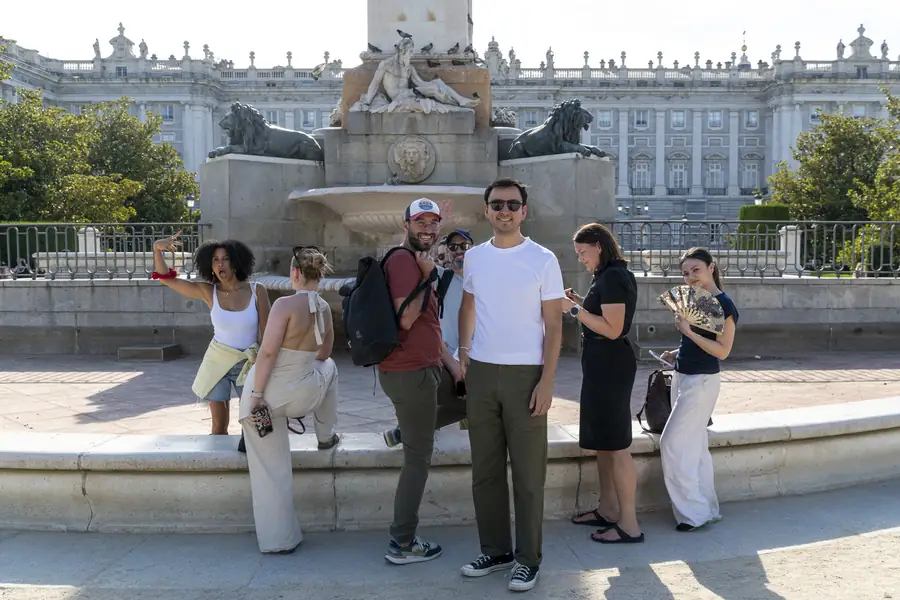
Madrid: The Ultimate Destination for Corporate Team Building
Why Madrid works so well for company retreats — travel, seasons, where to stay, a sample two-day offsite and activity ideas.
Read the guide →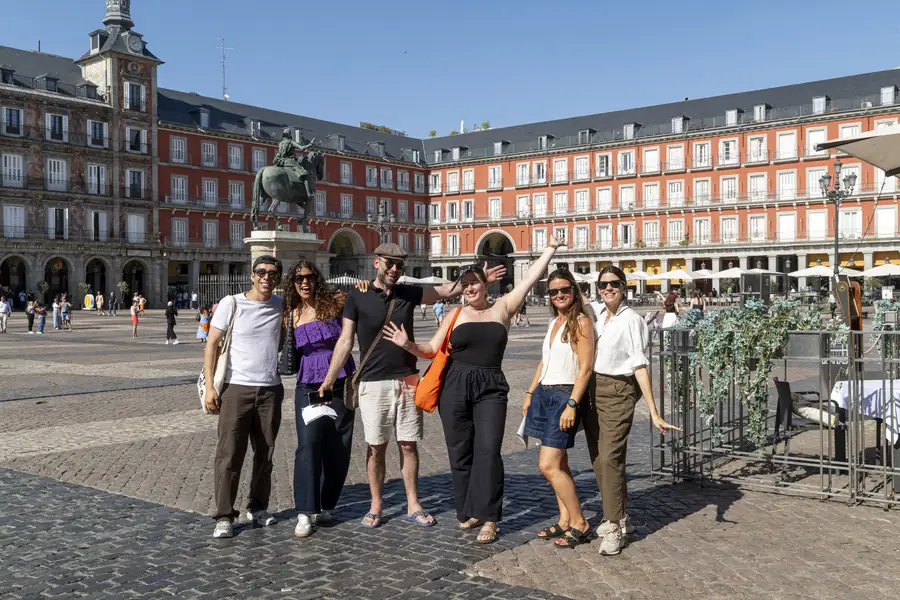
Top 10 Team Building Activities in Madrid (2027)
Ten team building activities in Madrid with prices, group sizes and providers — from a treasure hunt and flamenco to axe throwing and karting.
Read the list →